Creatures of the Lake
Many mornings between March and November I slip a kayak or canoe into the lake near my house in Connecticut and paddle 4 or 5 miles to start the day.
I did just that this morning, a very cloudy morning with rain arriving soon, temperature not more than 60 degrees. Early in the day I am often the only human on the lake. Me and the birds. Some days the birds seem few, and quiet. Today the birds were plentiful and active.
Many of the birds, of course, see me often. Occasionally as I approach a bird I gently say “don’t be alarmed, I won’t harm you,” thinking that perhaps the tone of my voice will get the message through. It doesn’t, so far anyway, though some birds, mallards and Canada geese mostly, sometimes glide slowly away from me, but not in any hurried way. I wonder if they might no longer see me as a threat, or at least an imminent threat. Perhaps they see me as a creature who moves around the surface of the lake sort of like they do, just bigger.
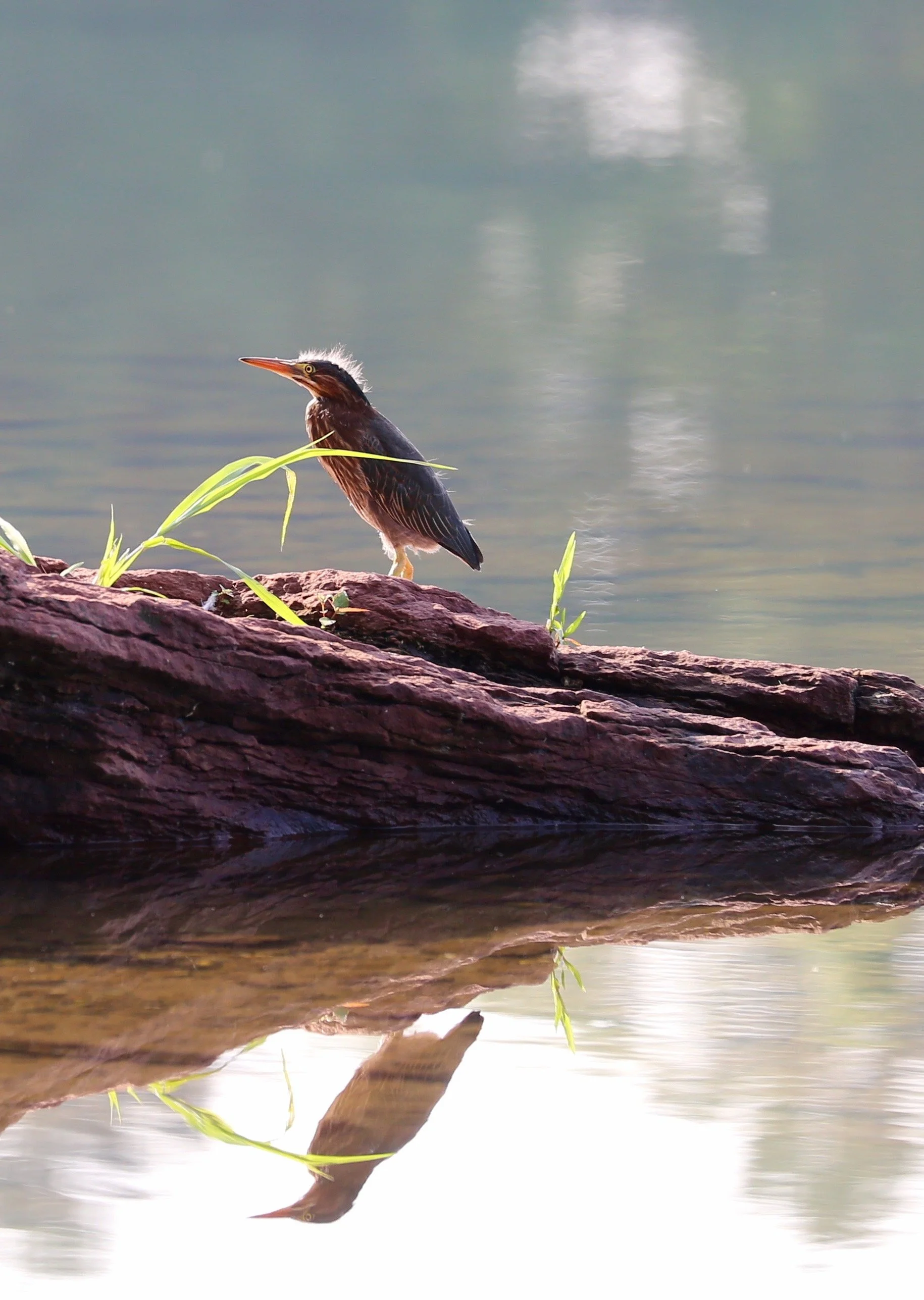
A very young green heron photographed with a long lens on the lake I paddle often, Lake Dunning. Adult green herons are very wary.
Other species - the kingfishers, the green herons, the cormorants, the spotted sandpipers, the eastern kingbirds, the grackles, the great blue herons, to name some I see often - are much more wary and fly off as I approach. The kingfishers, especially, chattering as they fly.
In one sense, I wish it wasn’t so. A pair of kingfishers this morning were perched on a branch rising out of the water on a tree trunk fallen in the lake. Would have been nice to see them close up - even better to get a great photo of them perched. They were maybe two feet apart, facing each other. But they are a very wary species. I got no closer than maybe 40 feet before they flew off as they always do, alarmed.
Then again, surely it is best that these species and all the others retain their wariness. They know their world, and we, for the most part, don’t. They know their many threats. They know what is best for them.